Best Flooring for Basements
Basement Flooring Requires a Different Approach
Basements are not like the rest of the house. Even finished basements live in a different environment, one that is closer to the ground, more sensitive to moisture, and more affected by seasonal temperature changes. Choosing basement flooring the same way you would choose upstairs flooring is one of the most common and costly mistakes homeowners make.
The right basement floor protects against moisture issues, stays comfortable underfoot, and holds up over time without creating hidden problems. This guide explains which flooring types perform best in basements, which ones should be avoided, and how to choose with confidence based on real Pennsylvania conditions.
The Basement Flooring Challenge
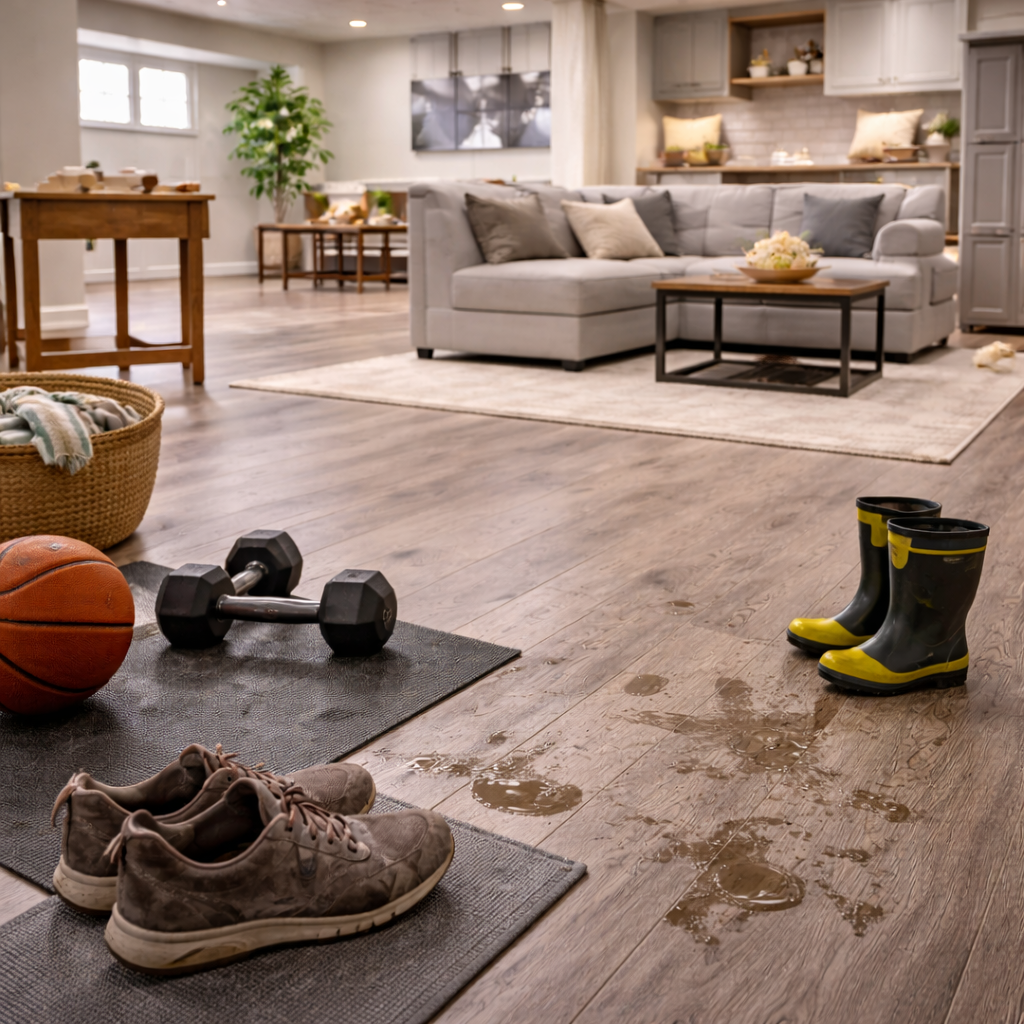
Basements face three main challenges: moisture, temperature fluctuation, and limited airflow. Even a basement that feels dry most of the time can experience seasonal humidity changes, minor water intrusion, or condensation. Flooring that cannot tolerate those conditions may fail slowly and quietly, often before homeowners realize there is a problem.
This is why basement flooring decisions should always prioritize moisture tolerance first, then comfort and appearance second. When the foundation is respected, everything else becomes easier.
Best Overall Basement Flooring: Vinyl Plank
Vinyl plank flooring is the most reliable basement flooring option for most Pennsylvania homes. It is waterproof, dimensionally stable, and designed to perform well below grade. Vinyl plank does not absorb moisture and will not warp or swell when humidity levels change.
For finished basements used as family rooms, home offices, playrooms, or guest spaces, vinyl plank offers an excellent balance of durability and comfort. It is warmer and quieter than tile, easier to maintain than carpet, and far more forgiving than wood-based products.
Vinyl plank is also a strong choice if you want consistency between floors. Many homeowners use vinyl plank throughout the basement and continue it into adjacent spaces for a cohesive look without compromising performance.
Carpet in Basements: Possible, With Conditions
Carpet can work in basements, but only under the right conditions. The basement must remain consistently dry, and humidity should be well controlled, often with a dehumidifier. When these conditions are met, carpet can add warmth and comfort to basement bedrooms or lounge areas.
The key is choosing the right carpet and padding combination. Basement carpet should focus on durability and moisture resistance rather than plushness alone. In basements with any history of water issues, vinyl plank is generally the safer choice.
Laminate Flooring in Basements: Proceed With Caution
Laminate flooring is sometimes considered for basements, but it requires careful evaluation. Because laminate has a wood-based core, it can be sensitive to moisture. Even small amounts of water or high humidity can cause problems over time.
If a basement is fully dry year-round and has proper moisture control, laminate may be an option in limited situations. However, in many Pennsylvania basements, vinyl plank offers similar visuals with far less risk.
Hardwood and Basements: Usually Not a Match
Solid hardwood is generally not recommended for basements. Wood is a natural material that reacts to moisture and humidity, and below-grade environments introduce too much risk for long-term performance.
Even engineered hardwood, while more stable than solid wood, is often better reserved for above-grade spaces. For homeowners who love the look of wood in a basement, vinyl plank with realistic wood visuals is usually the smarter solution.
Pennsylvania Basement Reality
Pennsylvania basements experience humid summers, cold winters, and occasional heavy rainfall. Even well-maintained homes can see moisture fluctuations. Flooring choices should assume these conditions rather than hope they never occur.
Choosing a moisture-safe floor upfront can prevent mold issues, odors, and costly replacements later. This is why basement flooring decisions should always be conservative and performance-driven.
General Cost Considerations
Basement flooring should be evaluated based on long-term cost, not just initial price. A lower-cost option that fails due to moisture can end up being far more expensive than a slightly higher upfront investment in a reliable material.
Vinyl plank offers strong value because it combines durability, moisture protection, and low maintenance. Carpet can be cost-effective in controlled environments, but it requires more ongoing care.
How To Choose the Right Basement Floor
Start with honesty about your basement. Does it stay dry year-round? Have you ever had moisture issues? Do you use a dehumidifier? These answers guide the decision far more than style preferences.
The most reliable way to choose is to view flooring options in your basement space. Carpet Fair’s shop-at-home service lets you compare moisture-safe flooring under your lighting conditions and layout so you can choose confidently.
See Basement Flooring Options In Your Home
Basement flooring decisions are easier when you see products in the actual space. Carpet Fair brings moisture-safe options to your home so you can choose with confidence.