Carpet vs Hardwood Flooring
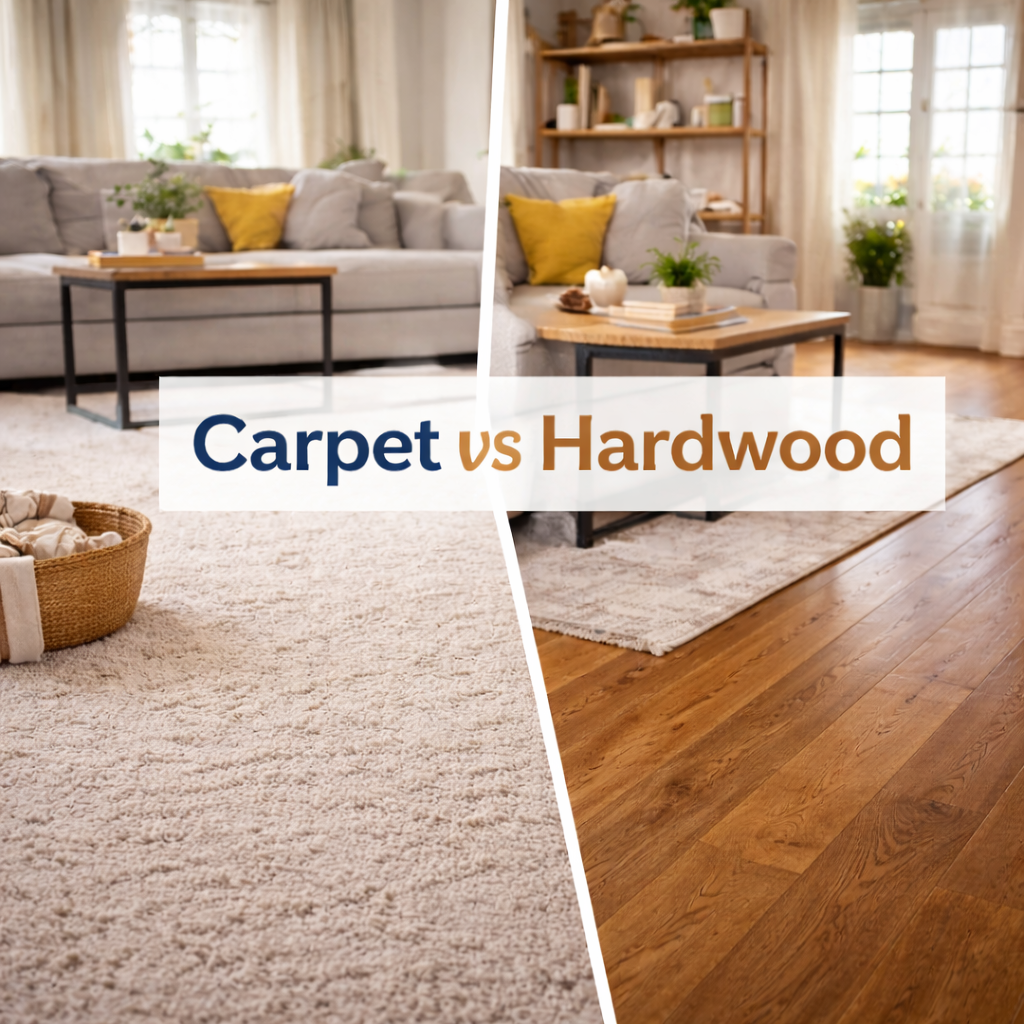
Two Great Options, Two Very Different Experiences
If you are comparing carpet and hardwood, you are already asking the right question. Both are excellent flooring options, but they solve different problems. Carpet prioritizes comfort and warmth. Hardwood prioritizes timeless style and long-term value. The best choice depends on how your home is used, how much traffic each space gets, and what you expect your floors to feel like every day.
For many Pennsylvania homeowners, the decision is also influenced by seasonal weather. Cold winters, wet entryways, and changing humidity levels can all play a role in how flooring performs. This comparison breaks down the differences in a practical way so you can make a confident decision and avoid choosing based on showroom lighting alone.
Which Flooring Is Best By Room
The fastest way to make progress is to think room by room. Carpet is often the best fit for bedrooms, stairs, and family spaces where you want warmth, softness, and reduced noise. Hardwood is often the best fit for living rooms, dining rooms, hallways, and open layouts where a clean, continuous look matters.
Many homeowners end up choosing a hybrid plan. Hardwood where style and continuity matter most, and carpet where comfort matters most. This approach often delivers the best day-to-day experience while keeping your budget focused where it makes the biggest impact.
Comfort, Warmth, and Sound
Carpet is hard to beat for comfort. It feels warmer underfoot in the winter and makes rooms feel quieter. If you have a multi-level home, carpet on stairs and upstairs hallways can significantly reduce sound transfer. This is a major quality-of-life improvement that is easy to overlook when comparing samples in a showroom.
Hardwood feels different. It is firm, stable, and clean. Many homeowners love the open feeling hardwood creates because it visually expands a room. The trade-off is that hardwood does not absorb sound the way carpet does, so area rugs are often used to soften the room and reduce echo.
Durability and Long-Term Wear
Hardwood has a long reputation for longevity. With the right care, it can last for decades. One of the biggest advantages is that hardwood can often be refinished, restoring its look after years of use. That long-term potential is a big reason homeowners see hardwood as a value investment rather than simply a purchase.
Carpet durability depends heavily on the fiber, the construction, and where it is installed. A carpet that is perfect for a bedroom might not be the right choice for a busy hallway. Modern carpet can be very durable, but it does not age the same way hardwood does. Instead of refinishing, the long-term plan for carpet is typically replacement after a certain number of years depending on traffic, pets, and maintenance.
The most practical approach is to match each area of the home with the right durability level. Put higher-performance carpet where traffic is heavier and choose comfort-focused options where traffic is lighter.
Maintenance and Real-Life Expectations
Hardwood maintenance is straightforward, but it does require consistency. Routine cleaning helps prevent grit from dulling the finish. Furniture pads prevent scratches. In homes with pets, nail maintenance helps reduce wear. Occasional refinishing may be part of the long-term life cycle.
Carpet maintenance is different. You will want regular vacuuming and periodic professional cleaning, especially in higher-traffic areas. The benefit is that many modern carpets offer stain resistance that makes everyday spills easier to manage. If you have kids or pets, choosing the right carpet construction and stain protection can make an enormous difference in how the carpet looks over time.
Pennsylvania Considerations
Pennsylvania weather can be hard on floors. Wet winters mean more tracked-in moisture and debris. If your entryway gets heavy winter traffic, hardwood can still work, but it may require a smart mat strategy and careful cleaning during the season. Carpet near entryways can be comfortable, but it may show wear sooner if it is constantly exposed to moisture and debris.
Seasonal humidity changes also matter. Hardwood is a natural material and will expand and contract slightly with humidity. Proper installation and acclimation are important. If you are looking for a stable wood look in areas where humidity fluctuates more, engineered wood options may be worth considering alongside traditional hardwood.
General Cost Considerations
Carpet typically has a lower upfront cost and can be a cost-effective way to refresh a home quickly. Hardwood is generally a higher initial investment, but many homeowners view it as a long-term asset, especially because of its lifespan and potential refinishing.
A practical strategy is to spend where you feel it and see it the most. Hardwood in main spaces for long-term impact, and carpet in comfort spaces for daily enjoyment. When planned this way, many homes get the benefits of both without overextending the budget.
How To Make the Decision Faster
If you are still deciding, do not try to solve it from a single sample. Flooring looks and feels different in different lighting, next to different wall colors, and alongside different furniture. The best way to decide is to compare both options in your home, in the rooms where they will actually be installed.
Carpet Fair’s shop-at-home service makes that easy. You can compare carpet textures and hardwood tones with expert guidance, then choose with confidence knowing you are selecting flooring that fits your space and lifestyle.
Compare Carpet and Hardwood In Your Home
Flooring choices become clearer when you see them in your own lighting and layout. Carpet Fair brings samples to you so you can compare comfort, color, and style where it matters most.