Vinyl vs Laminate Flooring
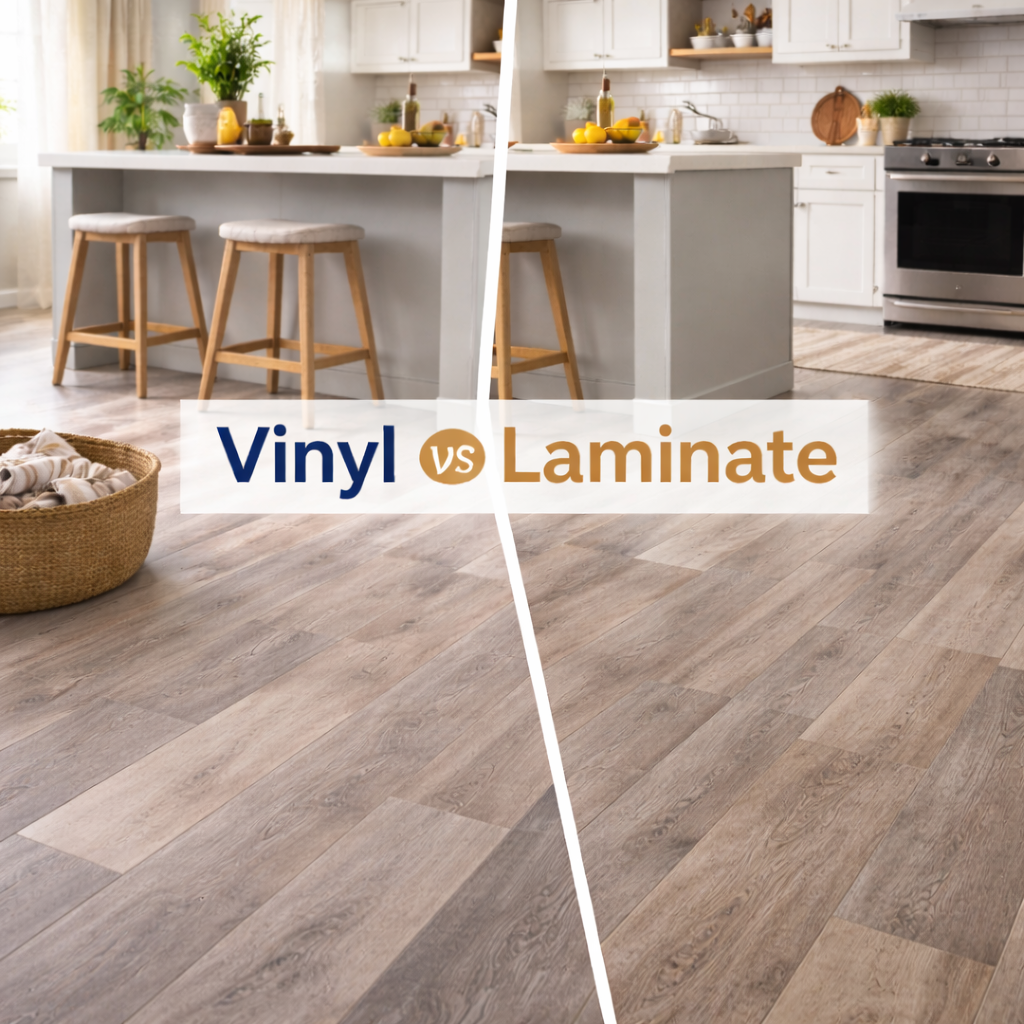
Two Practical Floors, One Key Decision
Vinyl and laminate are two of the most popular alternatives to hardwood because they deliver attractive, wood-inspired visuals with durability and easier maintenance. For many homeowners, both options feel like smart, modern choices. The difference is not simply style. The difference is performance, especially around water and daily wear.
If you are deciding between vinyl and laminate, the best approach is to look at where the floor is going, what that space experiences day-to-day, and how much water exposure is realistically part of your home. In Pennsylvania, seasonal moisture and winter mess can make this decision even more important, particularly for entryways, kitchens, and basements.
The Biggest Difference: Water Resistance
The simplest way to separate these two options is moisture. Vinyl plank flooring is designed to be waterproof. It is often the safest choice for spaces where spills, wet shoes, and routine moisture are normal, such as kitchens, basements, laundry rooms, and entryways. If you want the freedom to install one floor across multiple rooms without worrying about water, vinyl is usually the most flexible option.
Laminate flooring is often moisture resistant, but it is not always waterproof in the same way vinyl is. Laminate performs best in areas that remain mostly dry, such as living rooms, bedrooms, home offices, and hallways. In the right environment, laminate can be a durable and cost-effective choice with a very convincing wood look.
The practical takeaway is this. If you are choosing a floor for a space where water is a regular part of life, vinyl typically provides more peace of mind. If the space is dry and you want a wood-inspired look at a great value, laminate can be an excellent fit.
Durability and High-Traffic Performance
Both vinyl and laminate are built to handle everyday wear, but they handle it in different ways. Vinyl plank is resilient and tends to be very forgiving in active households. It is a popular choice for families with kids, pets, and busy daily routines. Vinyl’s wear layer is designed to resist scratching, scuffing, and staining, and its waterproof performance helps it succeed in high-traffic zones where spills happen.
Laminate is also durable and often resists scratching well, which is one reason it remains popular. In many homes, laminate performs very well in living areas and hallways. The key is matching the laminate product to the expected traffic level and making sure it is used in a space where moisture is controlled.
If you have a high-traffic home and you want maximum simplicity, vinyl typically provides broader placement options. If your high-traffic zones are primarily dry, laminate can still be a strong choice when selected appropriately.
Comfort Underfoot and Sound
Homeowners often notice a difference in how these floors feel. Vinyl plank tends to feel slightly softer and quieter underfoot, which can make it feel more comfortable in kitchens and main living areas. Laminate can feel a bit firmer. Some homeowners prefer that firmer feel because it can resemble the sensation of a traditional wood floor.
Both floors can benefit from the right underlayment to reduce sound and improve comfort. In multi-level homes, this can be an important consideration, especially if you are installing the floor on an upper level where sound transfer matters.
Appearance and Realism
Both categories have improved dramatically. Laminate is known for strong visual realism, with detailed textures and wood patterns that can look very convincing. Vinyl has also advanced, offering excellent visuals, modern plank sizing, and more natural surface textures than many homeowners expect.
The truth is that the best-looking option depends on the specific product, not just the category. That is why viewing samples in your own home is so helpful. Light, wall colors, and furniture can change the look of a floor significantly. What looks perfect in one space can look too warm or too cool in another.
Pennsylvania Considerations
Pennsylvania homes deal with seasonal changes, wet winters, and humid summers. Entryways and kitchens often see more moisture than homeowners realize, especially when rain and snow create a steady flow of tracked-in water and debris. Vinyl often shines in these real-life conditions because it protects the subfloor and reduces worry about moisture damage.
Basements deserve special attention. If you are considering laminate for a basement, the first question should be moisture history. If the basement stays consistently dry and you have good humidity control, laminate may be possible. If you have ever had dampness or water issues, vinyl is typically the safer long-term decision.
General Cost Considerations
Vinyl and laminate both offer strong value compared to hardwood. Pricing varies based on thickness, wear layer quality, visual realism, and construction. In many projects, the deciding factor is not just price per square foot. It is where the floor is going and what performance you need.
If you want one consistent floor in areas with water exposure, vinyl can reduce risk and future replacement costs. If your layout is mostly dry and you want a very convincing wood look at a competitive price, laminate can be a smart solution.
How To Choose Faster
To narrow the decision, start with a simple question. Is water exposure part of the reality of that space? If yes, vinyl is usually the better first option. If no, laminate becomes a stronger contender, and the choice can be made based on look, feel, and budget.
The best next step is to compare both options in your own home. Carpet Fair brings samples to you so you can see which floor works with your lighting, your layout, and your lifestyle. That is how you avoid second guessing and choose with confidence.
Compare Vinyl and Laminate In Your Home
Vinyl and laminate can look very different depending on lighting and surrounding colors. Carpet Fair brings samples to your home so you can compare style and performance where it matters.